What is Auditory Processing Disorder in Children?
Auditory processing disorder (APD) is a condition where the ears work normally but the brain has difficulty making sense of what it hears. The ears pick up sound just fine. The problem happens one step later, when the central auditory nervous system tries to interpret, organize, and remember that sound.
Think of it this way: hearing is like receiving a radio signal. With APD, the antenna works but the receiver inside the brain is having trouble tuning in and translating the signal into something clear and usable.
This is why children with auditory processing disorder often pass a standard school hearing screening. That screening checks whether the ears detect sound, but it does not test how well the brain processes it. APD affects roughly 3 to 5 percent of school-age children and is diagnosed through specialized testing performed by an audiologist, not a pediatrician or school nurse.
For a more detailed clinical overview of auditory processing disorder, including all four subtypes, see our APD evaluation and testing page.

Where Does the Problem Occur?
With standard hearing loss, the problem is in the ear. With auditory processing disorder, the ear is functioning normally. The difficulty is in how the brain handles the signal it receives.
Outer & Middle Ear
Sound enters and is conducted normally
Inner Ear (Cochlea)
Converts sound waves to nerve signals. A standard hearing test passes here
Auditory Nerve
Carries signals toward the brain
Central Auditory System
Brain stem and cortex interpret sound. This is where APD occurs
Signs Your Child May Have Auditory Processing Disorder
Children with auditory processing disorder often cannot describe what they are experiencing. They may not realize that what they are hearing sounds different from what others hear. Parents, caregivers, and teachers are usually the first to notice something is off.
At school
- Struggles to understand the teacher in a noisy classroom
- Mishears words or instructions regularly
- Has difficulty with phonics, spelling, or reading aloud
- Falls behind in verbal-heavy subjects despite normal intelligence
- Needs directions repeated or simplified
- Appears distracted or "zoned out" during verbal instruction
At home and socially
- Frequently asks "what?" or "huh?" even in quiet rooms
- Turns the TV up louder than seems necessary
- Gets frustrated or shuts down during group conversations
- Has trouble following multi-step directions at home
- Seems tired or irritable after school, a sign of listening fatigue
- Prefers quieter, one-on-one interactions over group settings
These signs do not automatically mean a child has auditory processing disorder. If several of them sound familiar and a standard hearing test has come back normal, a pediatric auditory processing disorder evaluation is often the next logical step.
Concerned about what you are seeing at home or school?
What Happens When Auditory Processing Disorder Goes Untreated
Most parents who find out their child has auditory processing disorder ask a version of the same question: "What would have happened if we hadn't caught this?" The research on untreated APD in children is fairly consistent, and it is worth understanding what the evidence shows.
Auditory processing disorder does not resolve on its own. Without identification and support, the effects tend to build on each other:
- Reading and language delays that compound year over year. Because phonics relies on hearing sound distinctions accurately, children with unaddressed APD tend to fall further behind in reading and spelling as the curriculum becomes more demanding.
- Misdiagnosis as ADHD or a behavior problem. The inattentiveness and frustration that APD produces in the classroom can look identical to ADHD from the outside. Children placed on the wrong intervention path may not get the auditory support they actually need.
- Loss of confidence and social withdrawal. Children who consistently struggle to follow conversations in noisy settings often start avoiding group situations altogether. Over time this can affect friendships and self-esteem.
- Listening fatigue affecting home life. Decoding imperfect auditory signals all day is exhausting. Many children with unidentified APD arrive home irritable and depleted, which parents often attribute to other causes.
- Academic gaps that are harder to close over time. The earlier a processing disorder is identified, the more runway exists to put classroom accommodations, IEP supports, and auditory training in place before foundational skills are too far behind.
None of this is meant to alarm. It is simply what the research shows about the downstream effects of an unaddressed processing problem. A proper evaluation provides the clarity needed to act, and many children make meaningful progress once the right supports are in place.
How Auditory Processing Disorder Differs from Hearing Loss and ADHD
These three conditions get confused frequently, partly because they share symptoms, and partly because standard hearing tests do not catch APD. Here is how they differ.
Auditory Processing Disorder vs. Hearing Loss
Hearing Loss
- The ear itself does not detect sound at normal levels
- Fails a standard audiometric hearing test
- Difficulty hearing applies across all environments
- Volume is the primary issue, sounds are simply too quiet
- Often managed with hearing aids or amplification
Auditory Processing Disorder
- The ear detects sound normally
- Passes a standard hearing test
- Difficulty is most pronounced in noisy or complex listening environments
- Clarity and interpretation are the issue, sounds arrive but the brain struggles to decode them
- Managed through auditory training, classroom strategies, and assistive listening
Auditory Processing Disorder vs. ADHD
ADHD
- A broader executive function and attention condition
- Inattentiveness occurs across all types of tasks and input, not just auditory
- Hyperactivity and impulsivity are common
- Does not specifically worsen in noisy environments
- Managed through behavioral strategies, therapy, or medication
Auditory Processing Disorder
- Specific to how the brain handles auditory information
- Inattentiveness is triggered by difficulty decoding sound, not a general attention deficit
- Typically not hyperactive or impulsive
- Noticeably worse in noisy or acoustically challenging environments
- Managed through auditory-specific interventions
It is worth noting that APD and ADHD can coexist. Research shows a higher-than-average overlap between the two conditions. A proper evaluation helps identify which challenges are rooted in auditory processing and which are not, so interventions can be targeted accurately.
For a deeper look at the comparison, including Dyslexia and Autism, see our full auditory processing disorder overview and our blog post on APD vs. ADHD in the classroom.
What Age Can a Child Be Tested for Auditory Processing Disorder?
The auditory processing disorder test battery involves a series of focused listening tasks that require sustained attention and the ability to follow instructions reliably. Because of this, most children need to be at least 6 years old to complete the evaluation. The majority of pediatric APD evaluations are performed on children ages 7 and older, when the results tend to be most reliable and clinically meaningful.
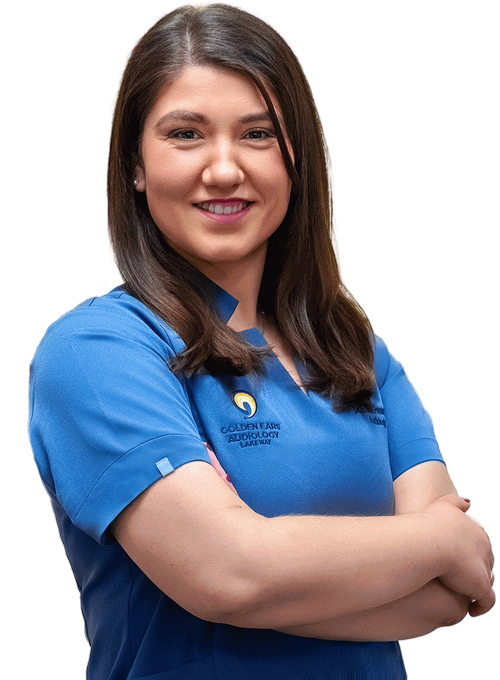
Some mature 6-year-olds can complete the testing successfully. Dr. Sonia Penaroza, Au.D., makes that determination based on the individual child's developmental readiness at the time of the appointment.
What if my child is younger than 6?
If concerns exist about a younger child's listening, language, or attention, there are still productive steps to take:
- A pediatric hearing evaluation can rule out hearing loss as a contributing factor
- A referral to a speech-language pathologist can assess language development and listening skills
- Documenting specific observations at home and school creates a useful baseline for later evaluation
These steps are not a substitute for an APD evaluation, but they ensure that the time before age 6 is not lost.
Are older children and teenagers tested too?
Yes. Auditory processing disorder evaluations are appropriate for older children and adolescents as well. Older students may seek testing after years of unexplained academic difficulty, or following a new teacher's or specialist's recommendation. There is no upper age limit. The same evaluation process applies, and results are equally actionable at any school age.
Quick Reference: Testing by Age
What to Expect During Your Child's Auditory Processing Disorder Evaluation
Many parents arrive not quite sure what an APD evaluation involves. Here is a straightforward walkthrough of the appointment so there are no surprises.
The total appointment is approximately 90 minutes. Children should be well-rested and have had something to eat beforehand, as the tasks require sustained attention.
Full Hearing Evaluation
Before the APD battery begins, Dr. Penaroza performs a complete hearing evaluation to confirm that hearing sensitivity is normal. APD testing can only be interpreted accurately when hearing loss has been ruled out first.
APD Test Battery
The child completes a series of specialized listening tasks inside the sound booth. These include listening to speech in background noise, distinguishing between similar sounds, recalling sequences of words or tones, and processing signals presented to each ear separately. Each task targets a different aspect of central auditory processing.
Same-Day Results With Parents
At the end of the appointment, Dr. Penaroza meets with the parent to walk through preliminary findings in plain language: what the results mean, what areas the child struggled with, and what the next steps look like. No waiting weeks for a phone call.
Written Report With Recommendations
A formal written report follows the appointment. It includes the test results, a clinical interpretation, and specific recommendations for school accommodations, IEP documentation, assistive listening devices, or auditory training, depending on what applies to that child's profile.
What to bring to the appointment
- Any prior hearing test results
- School reports or teacher notes describing listening concerns
- Any prior speech-language, occupational therapy, or psychological evaluations
- A list of the specific situations where your child struggles
- Insurance card and completed intake forms
Ready to book your child's evaluation?
Pediatric auditory processing disorder evaluations are scheduled by appointment.
Auditory Processing Disorder Treatment for Children
There is no single cure for auditory processing disorder, but there are well-established approaches that meaningfully improve how children function at school and at home. Treatment is usually a combination of several strategies tailored to the specific areas where a child's processing is weakest.
Auditory Training
Structured listening exercises that target the specific processing skills where a child shows weakness. These can be done in-office or with home-based programs. Research supports auditory training as one of the most effective direct interventions for APD in children. Learn more about APD treatment options.
Classroom and IEP Accommodations
The written report from an APD evaluation can support a school accommodation plan or IEP. Common classroom strategies include preferential seating near the teacher, written instructions alongside verbal ones, extended time on verbal tasks, and reduced background noise. These changes often have an immediate impact.
Assistive Listening Devices
FM systems and remote microphone technology transmit the teacher's voice directly to a child's ears, improving the signal-to-noise ratio in the classroom. These devices are particularly effective for children who struggle specifically with speech in noise, which is one of the most common APD profiles in school-age children.
Parent and Teacher Coaching
Understanding how a child's auditory processing works changes how the adults around them communicate. Simple adjustments, like speaking face-to-face, pausing between instructions, using shorter sentences, and pre-teaching vocabulary, make a significant difference day to day and do not require any additional equipment or appointments.
Coordination With Speech-Language Therapy
When auditory processing disorder overlaps with language delays or phonological difficulties, coordinating care with a speech-language pathologist is often beneficial. The APD evaluation results can inform and guide what an SLP focuses on, making that therapy more targeted and efficient.
Treatment starts with an evaluation
Treatment recommendations are tailored to each child's specific results. The first step is a pediatric auditory processing disorder evaluation.
Related resources
- Auditory processing disorder treatment options
- APD evaluation and testing (all ages)
- Speech-in-noise testing
- Pediatric audiology and hearing evaluations for children
- For SLPs & therapists — referral guidance
- For schools & IEP teams — how the report works
- Blog: APD vs. ADHD in the classroom
- Blog: When speech-in-noise scores suggest APD
Frequently Asked Questions About Auditory Processing Disorder in Children
The questions parents ask most often before bringing their child in for an evaluation.
Auditory processing disorder (APD) is a condition where a child's ears detect sound normally but the brain has difficulty interpreting, organizing, or remembering what it hears. It affects roughly 3 to 5 percent of school-age children and can significantly impact reading, language development, and performance in school. It is diagnosed through specialized testing by an audiologist. A standard school hearing screening does not detect it.
The most common signs include difficulty understanding speech when there is background noise, frequently mishearing or misunderstanding words, trouble following multi-step directions, poor phonics and spelling despite normal intelligence, needing instructions repeated often, and appearing inattentive in class even though a hearing test was normal. Many children with APD are tired and irritable after school because decoding imperfect auditory signals is exhausting.
With hearing loss, the ear itself is not detecting sound at normal volume levels, and a standard audiometric test will catch this. With auditory processing disorder, the ear detects sound normally and the child passes a standard hearing test. The problem is in how the brain decodes and processes the signal it receives. This is the primary reason APD often goes unrecognized for years.
ADHD is a broader attention and executive function condition that affects behavior across all types of tasks, not just listening. Auditory processing disorder is specific to how the brain handles auditory input. Inattentiveness and difficulty following directions stem from the processing difficulty, not from a general deficit in attention or impulse control. The two conditions can overlap and both can be present in the same child. A proper APD evaluation can help distinguish between them so the right interventions are put in place.
Most pediatric auditory processing disorder evaluations require a child to be at least 6 years old. The test battery involves sustained listening tasks that younger children typically cannot complete reliably. Most evaluations are performed on children ages 7 and older, when results are most clinically meaningful. Some mature 6-year-olds can complete the testing, and this is assessed at the time of the appointment. For children younger than 6, a pediatric hearing evaluation and a referral to a speech-language pathologist are the recommended first steps.
The evaluation starts with a full hearing evaluation to confirm that hearing sensitivity is normal. From there, a battery of specialized listening tasks is administered in a sound booth. These tasks assess how the child processes speech in noise, distinguishes between similar sounds, handles signals presented to each ear separately, and recalls auditory sequences. The appointment takes about 90 minutes. Parents receive preliminary results the same day and a written report with school and IEP recommendations shortly after.
A complete pediatric auditory processing disorder evaluation, including the initial hearing test and the full APD battery, takes approximately 90 minutes. Children should arrive well-rested and having eaten, as the tasks require sustained concentration throughout.
Auditory processing disorder does not resolve on its own. When it goes unaddressed, children tend to fall further behind in reading and language as the curriculum advances, experience social withdrawal from the frustration of not understanding conversations, and risk being misdiagnosed with ADHD or a behavioral problem. The listening fatigue that builds up during the school day also affects behavior and energy at home. Early identification and the right supports can prevent many of these outcomes.
Many major insurance plans cover pediatric auditory processing disorder evaluations. Coverage varies by plan and carrier. Contact Golden Ears Audiology at (512) 222-6880 before the appointment and the team can help verify your child's benefits. You can also visit the insurance information page for general guidance.
Golden Ears Audiology performs pediatric auditory processing disorder evaluations at 1008 Ranch Rd 620 S, Suite 203, Lakeway TX 78734. The practice serves families from Austin, Bee Cave, Westlake, Spicewood, Steiner Ranch, and the broader Central Texas and Hill Country area. You can schedule online or call (512) 222-6880. Learn more about audiology services in Austin and Central Texas.
Schedule a Pediatric Auditory Processing Disorder Evaluation
If the signs on this page sound familiar (a child who passes hearing tests but still struggles to follow directions, keep up in class, or understand speech when there is background noise), an auditory processing disorder evaluation is a reasonable next step. The evaluation provides a clear picture of what is happening and a concrete path forward, whether that means classroom accommodations, auditory training, assistive listening, or a referral to a speech-language pathologist.
Dr. Sonia Penaroza, Au.D. performs pediatric auditory processing disorder evaluations at Golden Ears Audiology in Lakeway, TX, and takes time at the end of every appointment to make sure families understand the results and know exactly what to do next.
Golden Ears Audiology
1008 Ranch Rd 620 S, Suite 203, Lakeway TX 78734
Phone: (512) 222-6880 | Email: [email protected]
Also see: APD treatment options | Pediatric audiology and hearing evaluations | Auditory processing disorder evaluation (all ages)
Serving families across Central Texas
Austin | Westlake & Eanes ISD | Cedar Park & Leander ISD | Round Rock ISD | Dripping Springs & DSISD