Key Benefits of Treating Hearing Loss
Improved Hearing
The most obvious benefit of hearing aids is that they can significantly improve a person's ability to hear sounds and communicate effectively.
Cognitive Benefits
There is growing evidence to suggest that addressing hearing loss with hearing aids may help reduce the risk of cognitive decline. Learn more about the connection between hearing loss and dementia.
Enhanced Quality of Life
With improved hearing, hearing aids will allow you to more fully participate in conversations, activities, and social gatherings.
Increased Independence and Confidence
Improved hearing can enhance an individual's sense of independence and self-confidence.
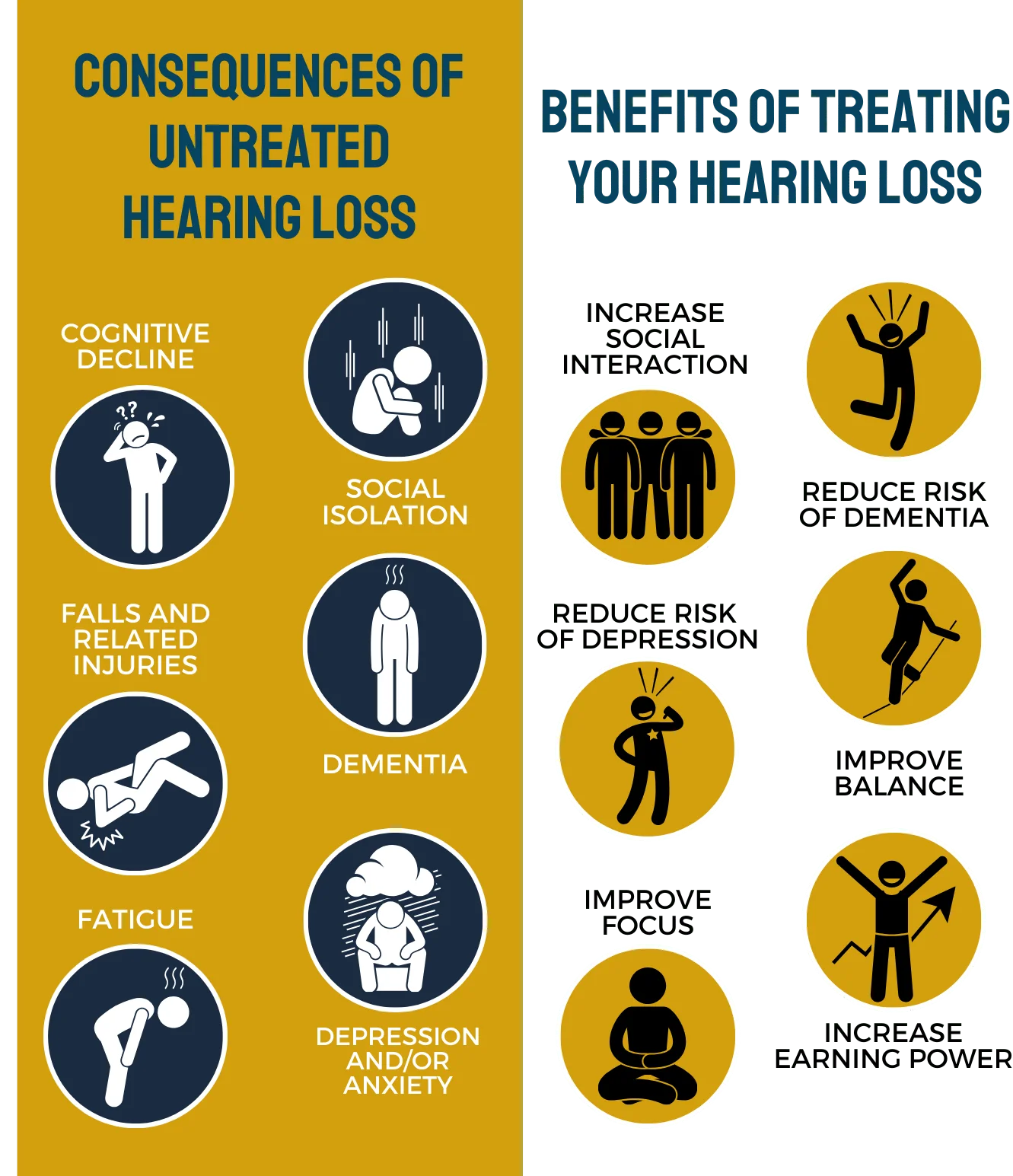
Emotional Well-being
Untreated hearing loss can lead to feelings of isolation, depression, and anxiety.
Professional and Social Opportunities
Better hearing can lead to improved job performance and career opportunities.
Safety
Being able to hear warning signals, alarms, sirens, and other important sounds around you is crucial to personal safety.
Tinnitus Management
One of the main causes of tinnitus is hearing loss. By treating your hearing loss with hearing aids, there is a chance your tinnitus will be reduced or eliminated. Learn more about how hearing aids can help with tinnitus.
Improved Balance
Maintaining stimulation to the ears will keep the balance system working as well. Hearing aids also offer better acoustic spatial awareness which can reduce your risk of falls and unintentional injuries.
Frequently Asked Questions
Research shows that untreated hearing loss is linked to accelerated cognitive decline and a higher risk of dementia. Hearing aids keep the auditory pathways active, reducing the cognitive load of straining to hear and helping maintain brain health over time. Learn more about the connection between hearing and brain health.
Yes. Because hearing loss is one of the leading causes of tinnitus, treating it with hearing aids often reduces or eliminates the perception of ringing. Many modern hearing aids also include built-in tinnitus masking features for additional relief.
Most people notice improved clarity in conversations within the first few days. Full adaptation—including comfort in noisy environments and natural sound quality—typically takes two to four weeks as the brain adjusts to processing sounds it had been missing.
Studies suggest that hearing aids improve spatial awareness and reduce the risk of falls. By providing auditory cues about your environment, hearing aids help the brain maintain better balance and orientation—especially important for older adults.
Today's hearing aids are smaller and more discreet than ever. Many models sit behind the ear with a nearly invisible receiver in the canal, and some fit entirely inside the ear. Your audiologist will help you choose a style that matches your comfort and cosmetic preferences.
Ready to Experience These Benefits?
Schedule a comprehensive hearing evaluation to start your journey to better hearing. We'll help you choose the right hearing aids for your specific needs and lifestyle. Learn more about our transparent pricing and flexible financing options.